
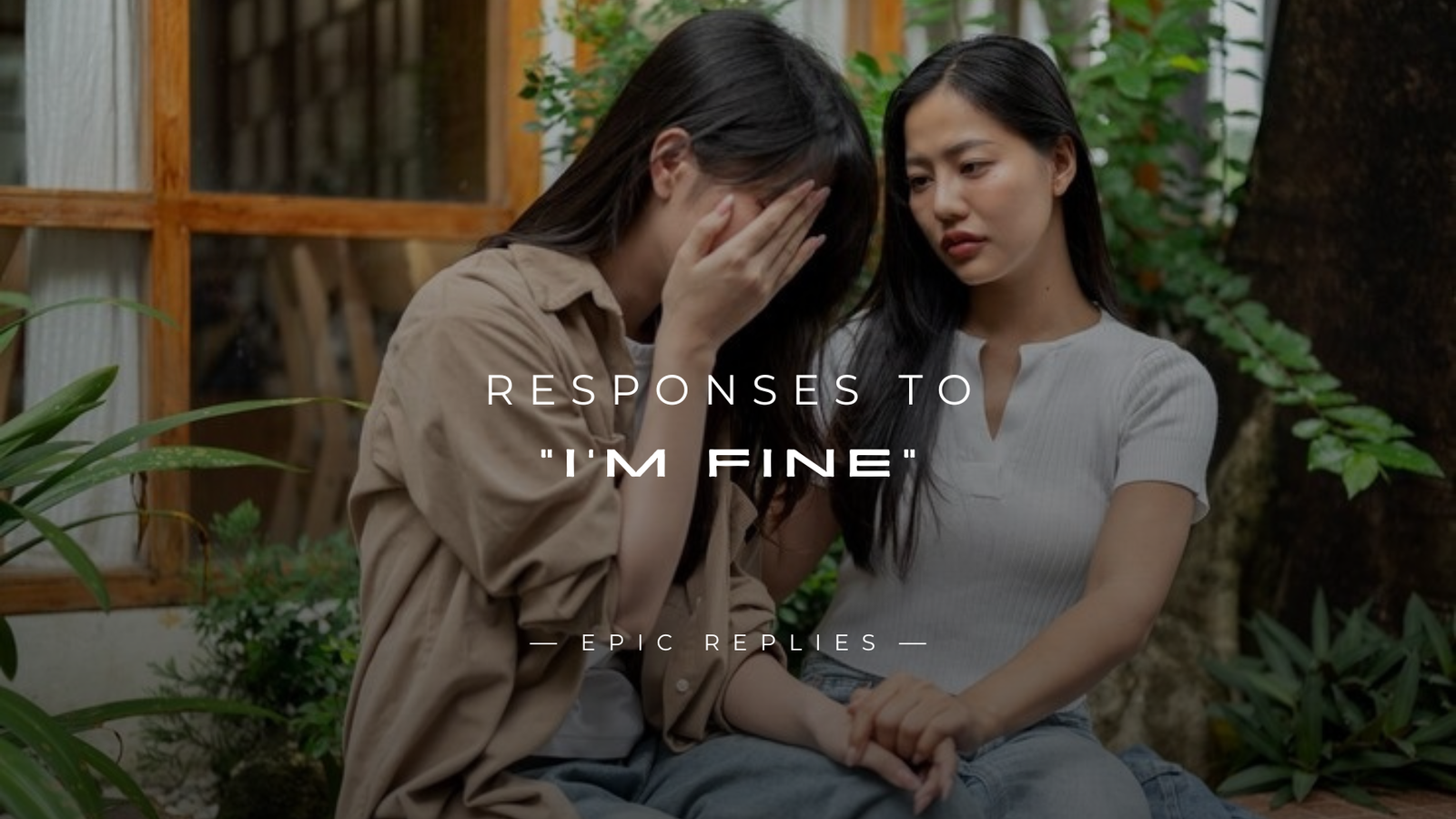
Almost every conversation begins the same way. How are you? And almost every conversation ends the same way. “I’m Fine.” We say it without thinking. Others say it automatically. It feels normal, polite, and harmless. Yet these two words often carry more emotional meaning than entire conversations. Understanding how to respond to “I’m Fine” is an important communication skill. It helps you strengthen relationships, support people emotionally, and become someone others genuinely trust.
250+ Responses to “I’m Fine”
Genuine Check-In
- Are you really okay or just saying that?
- You sure everything’s alright?
- I want to believe you, but how are you actually feeling?
- Okay, but how is your heart doing today?
- Is that a real fine or a polite fine?
- You can tell me if something’s bothering you.
- I just want to check again, are you truly fine?
- You don’t have to brush it off with me.
- Do you want to talk a little more about it?
- I’m here if that fine has a story behind it.
Gentle Concern
- You sound a little tired though.
- I hope you’re not carrying too much alone.
- I’m glad you’re okay, just remember you don’t have to pretend.
- Something about that sounded heavy, are you sure?
- I’m here if today feels harder than usual.
- Take care of yourself, alright?
- I hope you’re being kind to yourself today.
- If anything feels off later, you can always reach out.
- I just want you to know someone cares.
- Even if you say fine, I hope you’re truly feeling okay inside.
Light Humor
- That sounded like a suspicious level of fine.
- Fine fine or secretly not fine fine?
- On a scale from fine to send snacks immediately, where are we?
- I feel like that fine needs subtitles.
- Should I believe that or prepare emergency chocolate?
- That was the most dramatic fine I’ve ever heard.
- Fine usually means a long story waiting to happen.
- I will accept fine for now, but I remain curious.
- That fine sounded like it needs coffee.
- Okay, but blink twice if you need help.
Supportive Validation
- I’m glad to hear you’re doing okay.
- That’s good, I hope your day stays peaceful.
- Happy to know things are alright with you.
- Okay, I trust you.
- Good, you deserve some calm days.
- I’m relieved to hear that.
- Sounds good, take it easy today.
- I hope fine turns into great soon.
- Nice, sometimes fine is exactly enough.
- Glad you’re holding steady.
Emotional Invitation
- If you ever want to talk more, I’m here.
- You can open up whenever you feel ready.
- No pressure, but I’m always willing to listen.
- You don’t have to keep things inside with me.
- If fine changes later, you know where to find me.
- I’m here for the real conversations too.
- Whenever you feel like sharing more, I’m listening.
- You’re safe to talk about anything with me.
- Even small things matter if you want to share them.
- Take your time, I’m here whenever you need.
Observational Response
- You say fine, but you look a little stressed.
- I noticed you seem quieter than usual.
- You sound a bit low today though.
- Something feels different about your mood.
- You look tired, are you getting enough rest?
- I might be wrong, but you seem distracted.
- Your smile doesn’t fully match that fine.
- You seem like you have a lot on your mind.
- I can tell today might have been long for you.
- You’re saying fine, but I sense something deeper.
Casual Topic Shift
- Good to hear. So what did you do today?
- Nice. Any plans for later?
- Glad you’re okay. What’s been keeping you busy?
- That’s good. Seen anything interesting lately?
- Awesome. How has your week been overall?
- Good. Tell me something fun that happened today.
- Great. What are you looking forward to next?
- Nice. Have you watched anything good recently?
- Good to know. How’s work or studies going?
- Alright. What’s the highlight of your day so far?
Protective Respect
- Okay, I won’t push if you don’t want to talk.
- Got it, I respect that.
- Alright, just wanted to check on you.
- I’ll take your word for it.
- No worries, we can leave it there.
- I understand if you want to keep things private.
- Okay, I’m here without asking questions.
- I respect your space.
- Fair enough, I won’t dig deeper.
- Alright, thanks for telling me.
Reassurance Offer
- Let me know if you need anything at all.
- I’m just a message away if things change.
- If you need company, I’m here.
- You don’t have to handle everything alone.
- I’ve got your back no matter what.
- Reach out anytime you feel like it.
- I’m here whether you want to talk or just sit quietly.
- If you need a distraction, I’m available.
- You can count on me if things get tough.
- Remember, support is always here for you.
Humor + Care Blend
- Okay I believe you, but that fine sounded a little tired.
- I will accept fine for now, but I’m keeping emotional snacks ready.
- You say fine, my instincts say story incoming.
- Fine noted, but I’m still here if the real version wants to show up.
- That sounded like a brave fine. Want to upgrade it to honest?
- I trust you, but my concern radar is slightly active.
- Fine is allowed, but so is complaining if needed.
- Alright, but I’m still sending supportive vibes your way.
- You’re officially fine, unofficially I’m still checking on you.
- Fine accepted, but remember I’m available for the unfiltered version too.
Deep Emotional Probe
- What kind of fine are we talking about today?
- Are you coping or actually feeling okay?
- If you pause for a second, how do you really feel?
- What’s been sitting on your mind lately?
- Is there something you wish you could say but haven’t?
- When you say fine, what part of you agrees with that?
- Are you feeling peaceful or just pushing through?
- What has been emotionally heavy for you recently?
- Do you feel supported these days?
- If you were completely honest right now, what would you say instead of fine?
Practical Support
- Want me to help you with anything today?
- Do you need company or some distraction?
- I can listen, help, or just keep you company.
- Want to step out or talk for a bit?
- If something is stressing you, we can figure it out together.
- Need a break or a quick chat?
- I can help you think things through if you want.
- Would it help to vent for a few minutes?
- If you need support with something specific, tell me.
- I’m available if you need practical help or just presence.
Empathetic Silence
- Okay, I hear you.
- Got it. I’m here with you.
- Alright, no pressure to explain.
- I understand.
- Thanks for sharing that.
- I’m listening whenever you feel like talking.
- Okay, we can just sit with that.
- I’m here, even without words.
- That’s okay.
- I hear you and I’m staying present.
Encouraging Openness
- You don’t have to hide how you really feel.
- It’s okay if fine isn’t the full truth.
- You can be honest with me, even if it’s messy.
- I’m here for the real emotions too.
- You don’t need to stay strong all the time.
- Whatever you’re feeling is allowed here.
- You can talk without worrying about judgment.
- Even small worries matter if you want to share them.
- You’re safe to open up whenever you want.
- I value honesty more than pretending everything’s okay.
Affirming Positivity
- I’m glad things are steady for you.
- That’s good to hear, I hope it keeps getting better.
- Happy you’re doing alright today.
- Sounds like you’re handling things well.
- I’m really glad you’re feeling okay.
- That’s comforting to hear.
- Good, you deserve some peace.
- Nice, sometimes fine is exactly what we need.
- I’m happy things seem calm for you.
- I hope your fine turns into a great day.
Skeptical but Kind
- I’ll believe you, but I’m still checking on you later.
- You say fine, but I sense there’s more.
- I might be wrong, but that didn’t sound fully convincing.
- I trust you, though I’m here if fine isn’t the whole story.
- Something tells me you’re holding back a little.
- I’m not pushing, just saying you can tell me the truth.
- That sounded like a careful answer.
- I feel like you’re protecting yourself right now.
- I’m here if that fine ever changes.
- I care enough to wonder if you’re actually okay.
Check-Back Later
- Alright, I’ll check in with you later today.
- Okay, we can talk again when you feel like it.
- I’ll ask you again sometime soon.
- Take care for now, I’ll message you later.
- I’ll leave it here, but I’m coming back to this.
- Let’s revisit this conversation another time.
- I’ll check on you tomorrow too.
- Okay, I’ll give you space and follow up later.
- We can talk more when the timing feels better.
- I’ll circle back with you soon.
Friend-Level Honesty
- I know you well enough to ask again, are you actually okay?
- You don’t have to give me the polite answer.
- Be real with me, how are you feeling?
- You can drop the strong act around me.
- I can tell when something feels off with you.
- Talk to me honestly, I’m your person.
- If something’s bothering you, I want to know.
- You never have to pretend with me.
- I care about the real version of how you’re doing.
- Tell me the truth, even if it’s messy.
Energy Gauge Question
- How’s your energy today honestly?
- Are you feeling calm or just getting through the day?
- Mentally tired or doing alright?
- How heavy does today feel for you?
- Would you say you’re relaxed or drained?
- How is your mood level right now?
- Are you feeling motivated or running low on energy?
- Is your mind peaceful today?
- How are you holding up emotionally?
- If today had a mood rating, what would yours be?
Self-Disclosure Bridge
- I’ve been a little overwhelmed lately, how about you?
- I’m trying to survive this week myself, how are you really doing?
- I had a stressful day too, want to compare stories?
- I’ve been feeling off recently, does that sound familiar?
- I needed a break today, did you feel the same?
- I’ve been thinking a lot lately, what about you?
- Today drained me a bit, how has your day been honestly?
- I’m still figuring things out myself, how are you managing?
- I had one of those long days, did you?
- I’ve been trying to stay positive, how are you holding up?
Comfort Humor Deflection
- Fine is the most mysterious word ever invented.
- That sounds like the official human default response.
- Ah yes, the classic fine answer.
- Fine detected, emotions pending review.
- I will pretend to believe that for now.
- Fine sounds like it needs snacks and sleep.
- That fine deserves an award for being vague.
- I respect the fine, even if I suspect drama behind it.
- Fine is doing a lot of work in that sentence.
- Okay, I’ll log that as emotionally acceptable.
Motivational Response
- Glad you’re staying strong today.
- Keep taking things one step at a time.
- You’re doing better than you think.
- Even being fine is progress sometimes.
- I hope tomorrow feels even lighter for you.
- Keep going, you’ve handled tough days before.
- You’ve got this, truly.
- Every calm moment counts.
- Stay patient with yourself today.
- I believe things will keep improving for you.
Emotional Safety Signal
- You can always talk to me without fear of judgment.
- Whatever you feel is safe to share here.
- I’m here to listen, not to judge.
- You don’t need to filter your emotions with me.
- I’ll support you no matter what you’re feeling.
- This is a safe space for honesty.
- You can tell me anything, seriously.
- Your feelings matter here.
- I’m here for you exactly as you are.
- You’re not alone even if you say fine.
Reflective Listening
- Okay, you’re feeling fine right now.
- I hear you saying things are okay.
- So today feels manageable for you.
- Sounds like things are steady at the moment.
- You seem to be doing alright overall.
- I understand that you’re okay for now.
- It sounds like nothing major is bothering you.
- You’re feeling calm enough today.
- I’m hearing that you’re holding up fine.
- Alright, you’re doing okay at this moment.
Conversation Exit
- Good to hear, talk soon.
- Alright, take care of yourself.
- Glad you’re okay, catch you later.
- Okay, have a peaceful day ahead.
- Nice talking with you, see you soon.
- Alright then, enjoy the rest of your day.
- Good to know, I’ll talk to you later.
- Okay, stay safe and take care.
- Sounds good, we’ll talk again soon.
- Alright, have a good one.
The Most Common Emotional Response in Daily Life
“I’m Fine” works like social glue. It keeps interactions smooth. It avoids awkward pauses. It allows people to move through daily life without explaining personal struggles to everyone they meet. But convenience sometimes hides reality. Many people are not actually fine when they say it.
Why Simple Words Can Carry Deep Meaning
Language often protects emotions. Humans rarely express feelings directly. Instead, we use safe phrases that maintain emotional distance. Think of “I’m Fine” as a closed door that is not locked. Some people want privacy. Others secretly hope someone will knock again. Your response determines whether the conversation stays shallow or becomes meaningful.
The Real Meaning Behind “I’m Fine”
- Emotional Self Protection
People protect themselves emotionally in the same way they protect their physical space. Sharing feelings requires trust, safety, and energy. When someone says “I’m Fine,” they may be protecting themselves from judgment, misunderstanding, or emotional exhaustion. It is not dishonesty. It is self preservation.
- Social Habits and Polite Communication
Many cultures encourage emotional restraint. Complaining openly may feel uncomfortable or inappropriate in certain environments. So people learn to respond with neutrality rather than honesty. “I’m Fine” becomes social etiquette rather than emotional truth.
- When Someone Truly Feels Fine
Not every response hides pain. Sometimes people really are okay. Overanalyzing every situation can create unnecessary tension. Good communication balances curiosity with respect.
- When Someone Is Struggling Quietly
Other times, the phrase signals hidden stress, sadness, or fatigue. The person may not feel ready to explain their emotions but still appreciates gentle concern. This is where thoughtful responses matter most.
Psychological Reasons People Say “I’m Fine”
Understanding psychology helps you respond with empathy instead of assumption.
- Fear of Being Vulnerable
Vulnerability exposes emotions that feel personal and fragile. Many people worry they will appear weak or dramatic if they share openly. Saying “I’m Fine” feels safer than revealing uncertainty or pain.
- Not Wanting to Burden Others
People often believe their problems should remain private. They do not want to add stress to someone else’s day. Ironically, this protective instinct can create emotional isolation.
- Emotional Confusion and Self Awareness
Sometimes people genuinely do not understand what they are feeling. Emotions can be complex and layered. “I’m Fine” may actually mean, “I need time to figure things out.”
How to Tell If “I’m Fine” Is Genuine
Words provide information, but behavior provides clarity.
- Reading Body Language
Observe physical signals carefully. Limited eye contact, forced smiles, tension in posture, unusual silence. Human communication relies heavily on nonverbal cues.
- Listening to Tone and Timing
The way someone says “I’m Fine” often reveals more than the phrase itself. A relaxed tone suggests comfort. A hesitant or flat tone may signal emotional strain.
- Understanding Context
Always consider circumstances. Did something stressful just happen? Is the person acting differently than usual? Context transforms guesswork into understanding.
Common Mistakes People Make When Responding to “I’m Fine”
Even caring people sometimes respond poorly without realizing it.
- Ending the Conversation Too Quickly
Replying with “Okay” and moving on can unintentionally communicate disinterest. People remember who noticed when they were struggling quietly.
- Pushing for Answers
Repeated questioning can feel overwhelming. Emotional openness cannot be forced. Support works best when it feels voluntary.
- Offering Advice Too Soon
Many people jump straight into problem solving. Advice may be helpful later, but emotional connection comes first. Listening builds trust. Advice follows trust.
The Best Ways to Respond to “I’m Fine”
Responding well requires emotional awareness rather than clever wording.
- Gentle Follow Up Questions
Soft questions invite conversation. Are you sure you are okay? You seem a little different today. Want to talk? I am here if you need anything. These responses show care without pressure.
- Showing Emotional Availability
Your attitude matters more than your words. Maintain calm body language. Give your full attention. Avoid distractions. People open up when they feel emotionally safe.
- Listening With Intention
Real listening means understanding rather than waiting for your turn to speak. Allow pauses. Let the conversation unfold naturally.
Responding Based on Your Relationship
Different relationships require different approaches.
- Friends
Friendship allows honesty. A simple reminder of trust can encourage openness. You can talk to me if something is bothering you.
- Romantic Partners
Partners rely heavily on emotional connection. Express curiosity instead of frustration. I care about how you feel and want to understand when you are ready.
- Family Members
Family conversations may carry history and emotional sensitivity. Patience is essential. Offer support consistently rather than demanding immediate answers.
- Workplace Conversations
Professional environments require respect for boundaries. Let me know if work is stressful. I am happy to help if I can.
Emotional Intelligence and Communication Skills
Responding thoughtfully to “I’m Fine” reflects emotional intelligence.
- Active Listening in Practice
Active listening includes maintaining eye contact, nodding, and responding thoughtfully. Avoid interrupting or redirecting the conversation toward yourself. Attention communicates respect.
- Emotional Validation
Validation acknowledges feelings without judgment. Statements such as “That sounds difficult” help people feel understood even when you cannot solve the problem.
- The Role of Silence
Silence often feels uncomfortable, but it gives people space to speak honestly. Many meaningful conversations begin after a quiet moment. Patience encourages openness.
Respecting Emotional Boundaries
Not everyone wants to talk immediately, and that is okay.
- Knowing When to Pause
If someone repeats “I’m Fine” firmly, accept their response. Emotional timing belongs to them. Respect strengthens trust.
- Supporting Without Pressure
You can keep support available by saying: Whenever you feel like talking, I am here. This approach offers care without creating pressure.
Real Examples of Responses to “I’m Fine”
Here are practical responses you can use naturally.
- Everyday Situations
Alright. Just wanted to check in. Hope your day gets easier.
- Caring Conversations
You matter to me, so I want to ask again. Are you really okay? I am here to listen if something is going on.
- Serious Emotional Moments
You do not have to handle everything alone. Take your time. I am here with you. Simple language often creates the strongest emotional impact.
Cultural and Social Influences Behind “I’m Fine”
Communication styles vary widely among individuals and cultures.
- Cultural Communication Styles
Some cultures value emotional privacy and restraint. Discussing personal struggles openly may feel uncomfortable. Understanding cultural expectations helps you respond respectfully.
- Personal Personality Differences
Introverted individuals may process emotions internally, while others express feelings openly. Neither style is wrong. Awareness improves communication.
Turning Small Talk Into Real Connection
Responding thoughtfully to “I’m Fine” creates opportunities for deeper relationships.
- Asking Better Questions
Instead of routine greetings, try questions that invite reflection. What has been the highlight of your week? What has been challenging lately? Better questions encourage meaningful responses.
- Building Emotional Trust
Trust develops through consistency. When people feel heard repeatedly, they become more comfortable sharing honestly. Connection grows through small moments of attention.
The Psychology of Feeling Heard
Humans share a deep need to feel understood.
- Why Validation Changes Conversations
Validation reduces emotional stress and strengthens relationships. When someone feels heard, they experience relief even before solutions appear. Understanding itself becomes support.
- Human Need for Emotional Safety
Emotional safety allows people to express vulnerability without fear of judgment. Responding thoughtfully to “I’m Fine” helps create that safety.
When You Are the One Saying “I’m Fine”
Self awareness matters just as much as understanding others.
- Being Honest Without Oversharing
You do not need to reveal everything. Small honesty improves communication. I am okay, just a little stressed today. I am not at my best but I will be fine. Honesty builds authentic relationships.
- Developing Healthier Communication
Practice sharing feelings gradually. Emotional openness strengthens confidence and deepens connections over time.
Conclusion
Navigating the simple yet tricky “I’m fine” can be surprisingly challenging, but with these 250+ responses, you now have plenty of ways to keep conversations engaging, thoughtful, or playful. Whether you’re texting a friend, chatting with a colleague, or responding in person, there’s a response for every mood and situation. And if you’re looking to expand your conversational skills even further, check out our guide on 250+ Best Responses to “Where Do You Work?” to handle workplace chats with confidence and ease. Mastering these simple phrases can make your everyday conversations more authentic, fun, and meaningful.
FAQs
Q. Why do people say “I’m Fine” even when they are not okay?
People often use the phrase to protect their emotions, avoid vulnerability, or maintain social politeness.
Q. How should I respond if someone keeps saying “I’m Fine”?
Offer support once or twice, then respect their boundaries while reminding them you are available.
Q. Is it wrong to accept “I’m Fine” at face value?
Not always. Pay attention to context and emotional signals before deciding whether to follow up.
Q. What is the best follow up after hearing “I’m Fine”?
A calm response such as “I am here if you want to talk” shows care without pressure.
Q. How can I stop automatically replying with “I’m Fine”?
Pause before answering and share a small honest update about your feelings. Authentic communication improves relationships over time.